
Grading My Own Homework
The right calls and the wrong calls and the money in between them

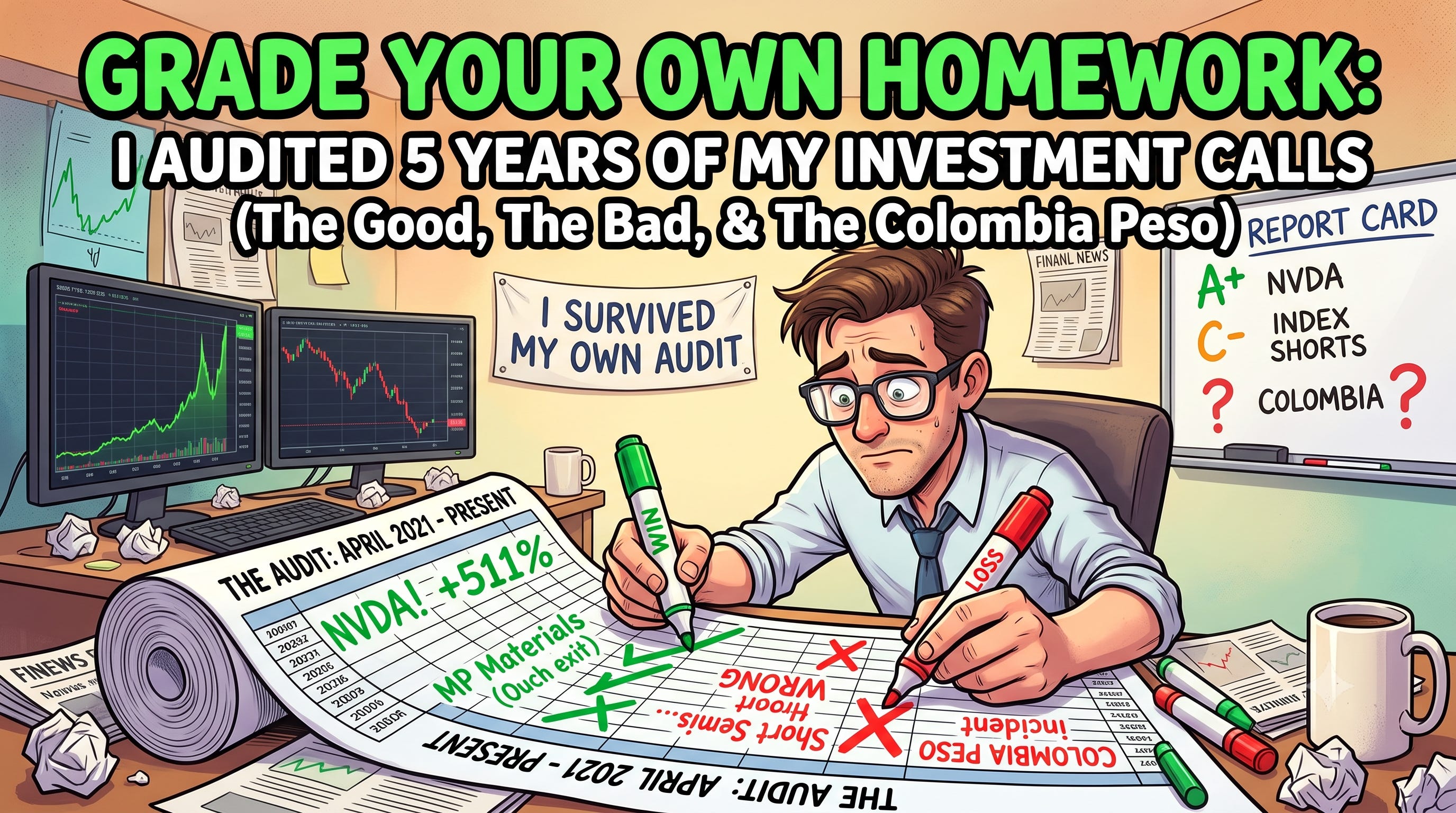
Last week I did something I recommend to everyone and enjoyed about as much as a dental visit: I audited myself. Every article this newsletter has published since April 2021, all of them, marked to market. The rule was simple. If a piece had an investible idea in it, we pretend $10,000 went in at the publication date price, and we grade it at Friday’s close. No cherry picking, no “well what I really meant was.” Didn’t pull out the losers, just like Bonnie Blue.
The number: $150,000 hypothetically deployed across 15 positions, worth $284,000 today. Up $134,039, about 89%, over a stretch where you could have just bought the index and slept fine. And before you ask, yes, the spreadsheet includes the trades I would rather forget (we will get to Colombia).
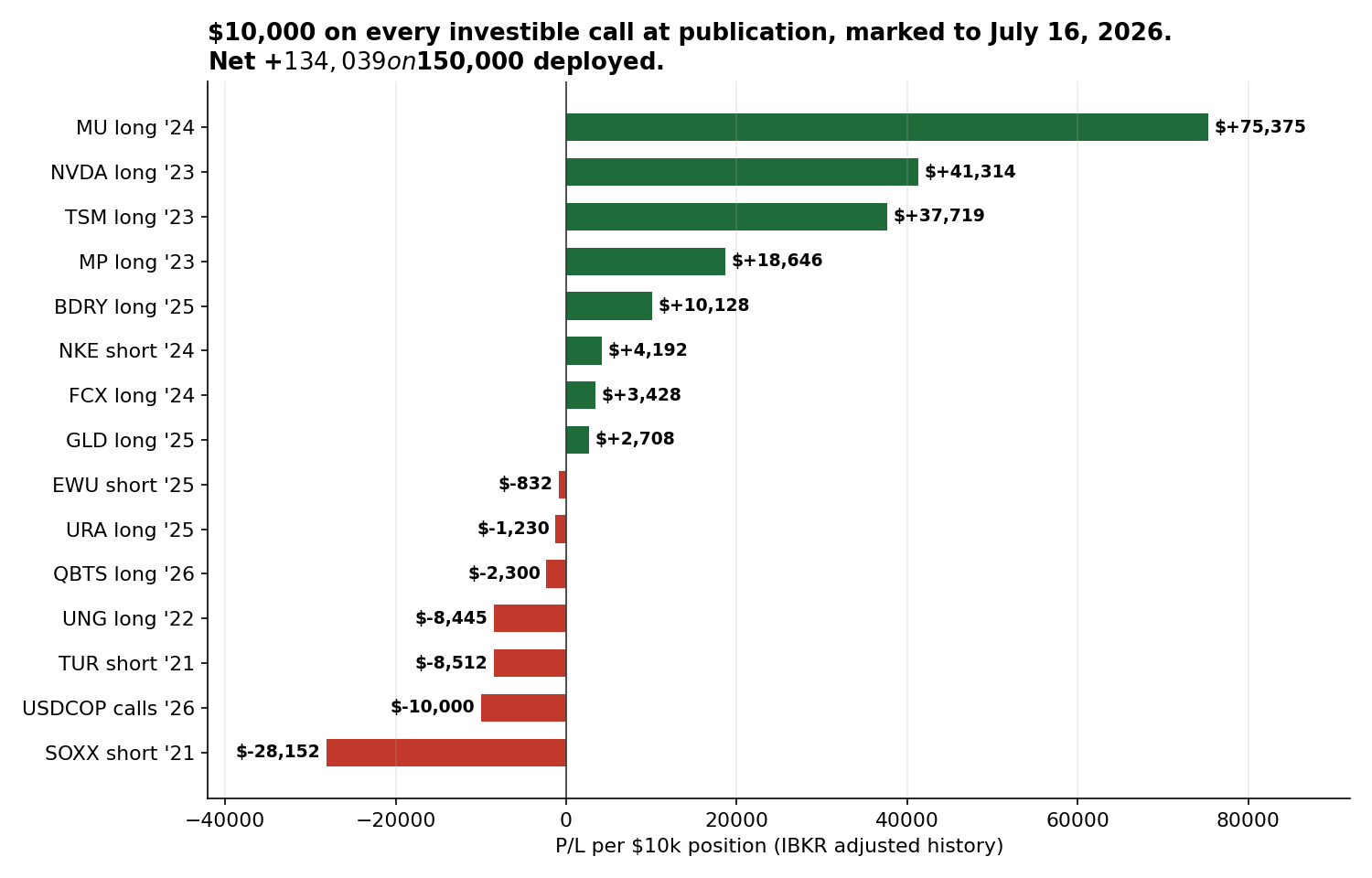
I am showing you this for two reasons. The first is obviously a victory lap, I am not going to pretend otherwise, don’t hate the player, hate the game. The second reason is more useful: staring at years of your own graded calls teaches you exactly how you think, where that thinking makes money, and where it sets money on fire. That second lesson is the one that would help anyone, every fund manager you ever meet does this annually, or at least they should.
Look at the green side. MU, NVDA, TSM, MP, FCX. Every single one is the same trade with a different flavor: a country does something coercive, a physical flow has to reroute, and one company owns the bottleneck the flow must pass through. Our piece on microelectronics said Chinese export restrictions on graphite and rare earths were harbingers and that the CHIPS Act had a refining-sized hole in it. The trade was never “AI is cool.” The trade was: Washington and Beijing are going to force the supply chain to rebuild itself, and the rebuild has tollbooths. Buy the tollbooths. That basket of three turned $30k into $127k.
Now look at the red side. SOXX short, TUR short, the Colombia peso calls. Also the same trade wearing different tickers: me having a correct macro thesis and expressing it through an instrument that had other plans. In 2021 I thought Chinese chip subsidies would eat US semiconductor margins (short semis, wrong, they 3.8x’d). The lira collapsed exactly as written in 2021, and the Turkish equity ETF I would have shorted nearly doubled anyway, because equities in a hyperinflation environment are a hedge, not a casualty. In May the peso was supposed to break 3,750 on the election. It rallied to a six year high instead (the market read the runoff better than I did, respect). The lesson, simply put, being right about the country is not the same as being right about the ticker. Bearish views need a named casualty, not an index.
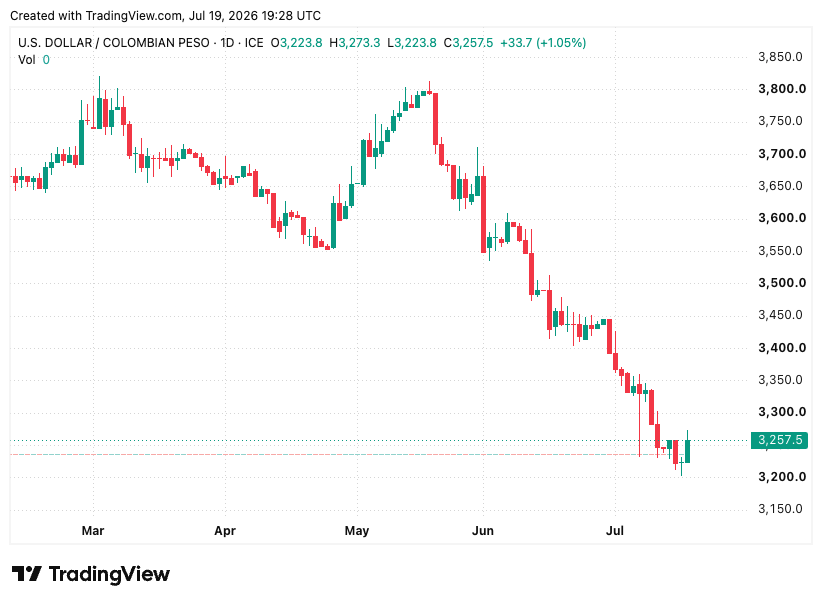
The other thing the audit measures is the part I actually care about, because anyone can get lucky on momentum. so we measured lead time.
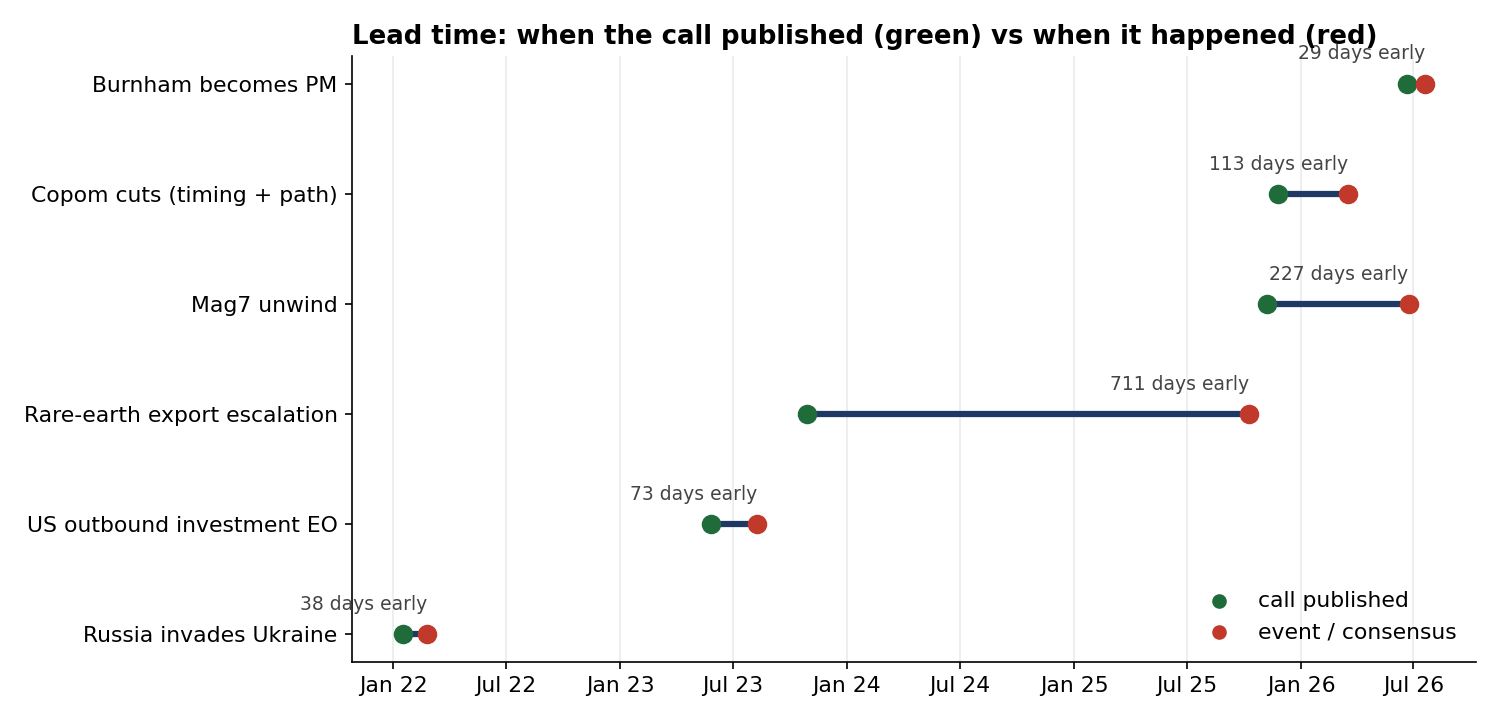
A good example is the Mag7 unwind was flagged 227 days before June’s $2.3 trillion washout. Either i have some kind of an edge or blind luck, and it comes from the tradecraft piece that has to be built into every finance professional, degenerate trader, or strategists toolkit. Everyone is working in a constraints based environment, finding out what those constraints are will show the next move that continues the pattern, and you position before the pattern becomes a headline. By the time CNBC agrees with you, the trade is over. Which brings me to the part of the audit that hurt.
The single most expensive finding was not a bad call. It was good calls with no exit. MP peaked at +511% and I graded it today at +186%. Gold peaked at +77% in the January blowoff and sits at +27%. Natural gas hit the $6 target I wrote down in January 2022, ran to +103% that August, and an investor who held the ETF to today would be down 84% (contango is a patient thief). Across the book, perfect exits were worth about $168k more than diamond hands. So the newsletter now has a standing rule and you can hold me to it in print: a third comes off at a double, and the rest exits when the thesis shows up as consensus. When the idea is the headline, you are no longer early, and early was the whole edge.
One more confession, because the audit graded my language along with my tickers. every call I ever made with the words “almost guaranteed” attached went on to miss. All of them. Saudi joining BRICS, almost guaranteed, never joined. The calls made with the boring old intel-school hedges (”we assess with moderate confidence,” “likely”) hit at a wildly higher rate. I used to think calibrated language was bureaucratic throat-clearing from my old days. It turns out it was risk management, and certainty was the tell that I had stopped analyzing and started rooting. If you take one thing from this piece, take that: audit your own confident sentences, they are where the bodies are buried.
So here is the strategy, the whole thing, no course to sell you. Watch nation state behavior for forced flow changes (export controls, sanctions, subsidies, elections with real fiscal consequences). Trace the flow to the physical bottleneck. Buy the bottleneck owner with a 6 to 24 month horizon and real size, because that is where the hit rate lives. Express bearish views only through a named casualty or defined-risk protection, never an index short. Keep a small rented hedge book for the fragility you can see coming (I have been paying insurance premiums on tight credit spreads for months, still waiting, still glad). Write down what would make you wrong before you enter, in a sentence a stranger could grade. Then grade it, quarterly, in public if you have the stomach.
Will the future of this newsletter survive the same audit? I genuinely do not know, and that uncertainty is the correct position size. Let me know in the comments which call you think ages worst, or DM me if you ran your own audit and found your own “almost guaranteed” bodies. Misery loves company and so does calibration.